

It’s officially conference season.
If you’re in economic development, that means panels. Lots, and lots, and lots of panels. But let me tell you, not all panels are created equal. Some are so useful you’re still thinking about them, and using what you heard, weeks later. Others are a constant struggle not to get sucked into the ever-persistent email pile on your phone.
My favourite part of any conference or economic development event is when the people building the companies get the mic. Partly because it’s so valuable for my work, and partly because they rarely stick to a script and almost always use the platform to tell it like it is.
A couple of weeks ago I sat in on a brilliant one, a founder panel at the Community Futures Western Ontario AGM in London. Up-front I’ll come clean and admit some bias. Scott Fairley from Optimotive, who builds autonomous construction robots for extreme environments, was one of the four, and I’ve worked with him since I was a baby economic developer with a full head of hair and no real concept of what this profession even was yet.
All four of them physically make something, which I think is the hardest kind of business to grow and the most interesting to dive into as a coach, because physical goods are so different from each other and so complex. In just one panel you had makers of robots, houses, functional nutrition products, and crazy delicious frozen ramen. Alongside Scott were Xavier Toby from Axe Living in Thorold, Eric Zimmerman from Enhanced Medical Nutrition and Khalil Khamis from Crafty Ramen in Guelph. All four were financed by SOFII (a southern Ontario innovation loan fund). All four are in the same uncomfortable stage, where the initial grind to find validation is over but the longer grind of building at scale is still ahead.
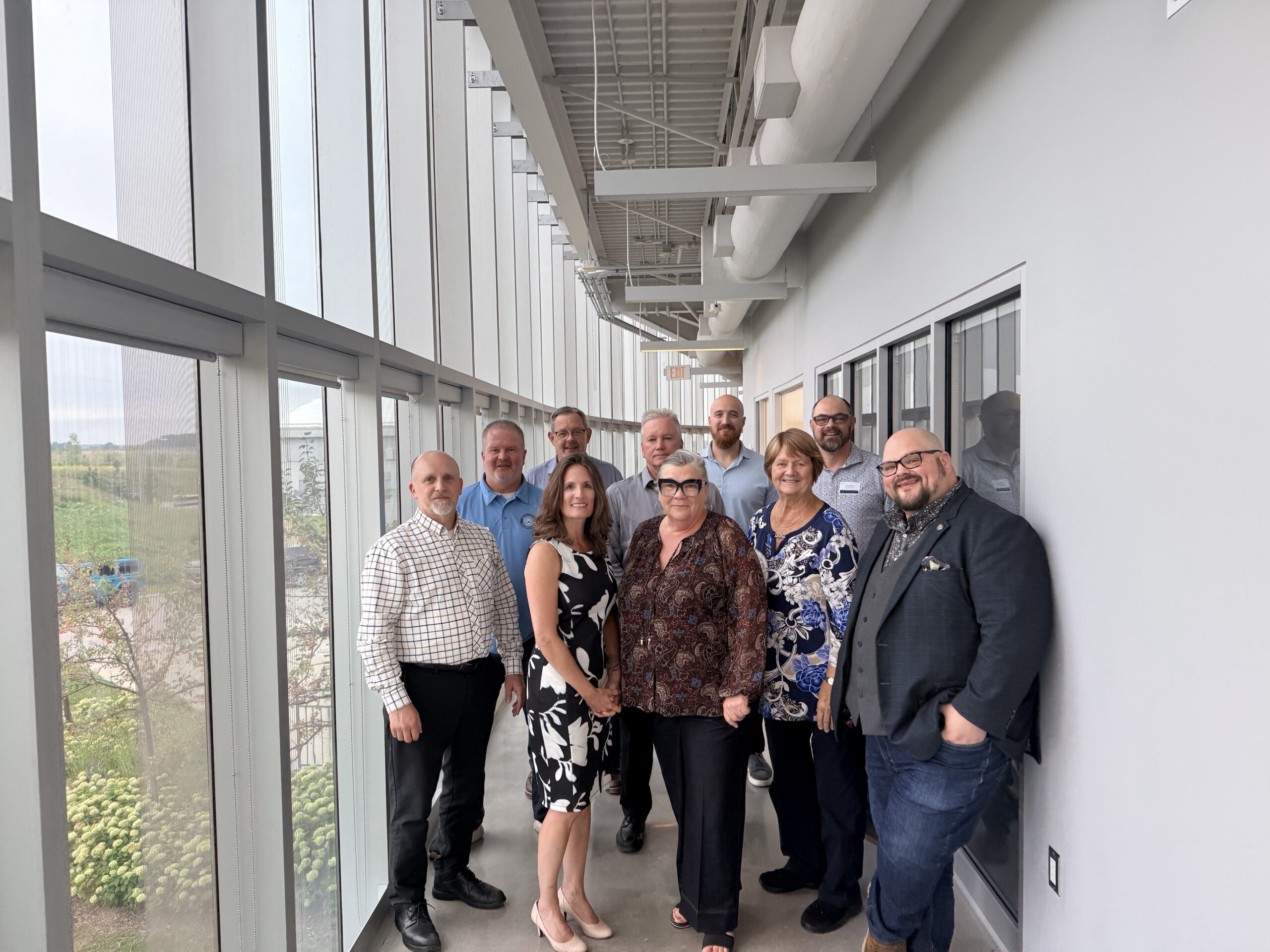
Board of Directors, Community Futures Western Ontario
WEtech launched AI programming for founders this fall, so when the floor opened I jumped at the opportunity to ask how they were using it, in the product or to help them scale. What I wanted to know most was something I didn’t ask, but would be paying close attention to. Where are the gaps. What isn’t it doing for you.
Three of them answered the question I asked. Then the conversation did what my favourite panels do and wandered off the script. By the time the next question came, the four of them had covered most of what I’d want any founder to think through before handing part of their business over to this stuff.
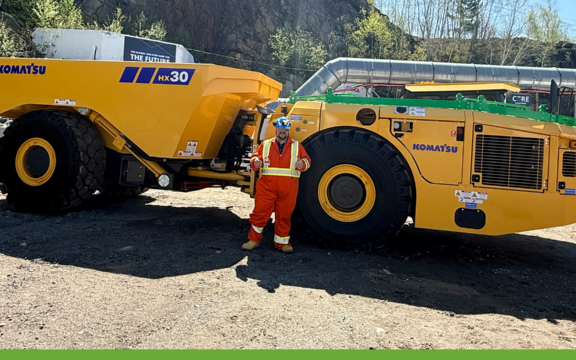
Start with what nobody in that room was arguing about, which is that it works, and it’s fast. Scott said the capabilities his team has pulled off in the last six months are more than he’s seen in the four to six years before that. His best example was internal tooling, the kind of project that used to mean pulling your core team off the product to build something that makes everyone else’s job easier. Now it gets done in-house, and it doesn’t have to be a fully technical person doing it. His maintenance staff used to write their notes down, sit at a computer and log it all in a spreadsheet. Now they carry a tablet and talk to a voice agent like an Iron Man Jarvis, as they go. The company also has a system tracking every one of its robots across Michigan and Ontario. It flags risk to the operations team on its own, right down to “we should pull this one home.”
Khalil called it a game changer, and his example was cost of goods sold. In a restaurant, he said, that’s pretty easy. Take a couple of inventory accounts, add up your purchases, and that’s what you sold. In manufacturing it’s layers. The noodles have their own ingredients and labour, the broth has six ingredients and its own labour, then the chicken, and by the time you get to what he called the final puck of ramen, it’s a data lake. Two or three years ago, a dashboard that let you drill into a month of production runs and find where the cost went up might have been a half-million-dollar build. They build those in a week now and refresh them every week. “We can go further faster,” he said, which is about as tidy a summary of the upside as I’ve heard from anyone.
Eric’s company is further back on that curve, by his own account. They aren’t building agents or wiring it through the whole business, which Scott’s team clearly is. But they’d recently hired someone out of a big AI company in Toronto, so they’re learning fast. He said they’ve been blown away by how much time it saves on things like pivot tables, the kind of work that used to make you want to smack your head against the wall. Anyone who has lost an afternoon to a spreadsheet knows exactly what he meant.
That puts them ahead of most Canadian businesses. It also puts them in line with our own clients. Yvonne Pilon wrote earlier this month that 91 per cent of WEtech’s portfolio is using or building AI, and nearly half call it core to their strategy. In Statistics Canada’s survey from the second quarter of this year, 19.2 per cent of businesses said they’d used AI to produce goods or deliver services in the previous twelve months. That’s up from 12.2 per cent a year earlier and 6.1 per cent the year before, so it has roughly tripled in two years and it’s still fewer than one business in five. Among the smallest businesses, the ones with one to four employees, more than two in five told StatCan that AI isn’t relevant to them.
I think that gap matters most for companies that make physical things. I wrote about grit-tech last winter, the space between bits and atoms where software meets equipment, supply chains and people moving real things through real space. A software company already has people who build software. A manufacturer or a food processor usually doesn’t. So, the internal tool never got built and the dashboard never got made. What Scott and Khalil described is those companies getting access to a kind of capacity they could never afford to hire while trying to scale. Scott says this opens the door for a next generation of builders who don’t need the computer science degree or the mechanical engineering degree. A person with intent can build the thing they’ve always wanted to build, cheaper and faster than ever before. When he says that, I think about how many operators in this region know exactly where the friction lives and have never had anyone to build the fix.
It’s also already inside the building, whether anyone planned for it or not. Eric said it can be a little scary, how you let it loose within the workforce. When they surveyed their team, somewhere between thirty and thirty-five people, pretty much everyone admitted to using two or three AI platforms that weren’t company accounts. His line was that “we have to educate our employees faster than they’re learning,” meaning on their own. He was the first to say that’s really tricky, and his line is one that I think many businesses can take on as a north star as they approach this technology. Educating employees faster than they are learning on their own means more than how to use the tech. It’s how to use the tech in ways that complement the values and culture of the company they are using it for.
Eric’s shop isn’t unusual. Microsoft and LinkedIn surveyed 31,000 people across 31 countries for their 2024 Work Trend Index. Seventy-five per cent of knowledge workers said they were already using AI at work, and 78 per cent of those users were bringing their own tools. That survey is two years old, so if anything, I’d expect the number to be higher now, but the pattern is the one Eric found in his own company. People find something that saves them an hour and they use it, policy or no policy.
The organizations that support founders are in the same spot.
Community Futures Western Ontario started role-specific AI training earlier this year. They began with their business and loan advisors, the people who sit across the desk from borrowers, before their general managers and executive directors went through it. I like that order. The people closest to the client are the ones most likely to be handed a business plan or a cash flow projection that a tool helped write. They need to know enough to question it. I’d rather admit that the organizations advising founders aren’t always ahead of them on this than pretend otherwise. A lot of us are learning alongside the founders we’re supposed to be helping.
Xavier was the one who turned the conversation. He said he was going to answer the question a bit differently. AI helps with some of their data analysis. But a lot of companies have approached him offering to have AI run his sales process and look after his customers. His answer is that no one’s going to buy a house on the computer. It’s too big an expense. No one’s going to spend $200,000 on something like an Amazon purchase. Buying a house and building one both come with a lot of human interaction, he said, and people want to talk to someone through that process. Parts of their factory are semi-automated, but a lot of the work is done by people, and he said it always will be.
Then he went a step further. He said he feels like we’re losing a large part of our humanity in the AI conversation, and that we forget part of being alive is human interaction and the joy of that. When it comes to a big-ticket item, he said, nobody is prepared to make that investment without some kind of emotional connection.
Eric picked it straight up. His company speaks with patients on the phone. People call to place orders, or to talk through the challenges they’re having with surgery. “Put your hand up if you want to talk to a robot,” he said to the room. He admitted they might get there one day. Maybe a year from now he’ll be giving a presentation on robots talking to their patients, but absolutely nobody wants that right now. “They don’t want to press five buttons,” he said. “They want to pick up the phone, they want to talk to someone.” His advice was to think hard about the business and the function you’re in before you jump to plugging it in everywhere.
Customers seem to agree with him. Gartner surveyed 5,728 customers at the end of 2023, and 64 per cent said they’d prefer companies didn’t use AI for customer service. More than half said they’d consider switching to a competitor over it, and their top concern was that it would get harder to reach a person.
There’s a pattern in the four answers.
Everyone’s using it, and where they draw the line seems to depend on how exposed the customer is when they deal with you. A puck of ramen is lunch. Scott’s robots are a tool on somebody’s job site. A house is the most money most people will ever spend, and going into surgery is about as scared as most of us ever get. The closer a business sits to a moment tied to something emotional and critical, the more of the work needs to stay with a person.
Eric handed me the best test for this later in the session, when someone asked the panel about risk. An investor in his company, someone who’s been very successful with startups, told him to ask one question about any decision: is it reversible or irreversible? If it’s reversible, do it all day long. If it’s irreversible, if something goes wrong and you can’t take it back, spend a lot of time thinking about how much risk you’re willing to take. He was talking about running a company, but I can’t think of a better way to decide where AI goes. A dashboard you rebuild every week is about as reversible as it gets. A family’s trust in the people building their house, or a patient’s trust in the voice on the phone before surgery, is a lot harder to get back once it’s gone.
Khalil’s worry was closer to home, inside his own company. Right after describing the half-million-dollar dashboard built in a week, he’d said it’s almost going the other way now. Analysis paralysis. You have way too much data, so you have to call it back and pay attention to the key pieces. Anyone who has watched a leadership meeting drown in a forty-slide deck knows the feeling. A tool that makes it nearly free to measure everything still can’t tell you which three numbers matter.
Then, right after Eric’s robocalls, Khalil came back with a bigger worry. The scary part, he said, is the next generation. He thinks the most important skill we can teach them is critical thinking. If you’re using the tool and you don’t have experience in the work, you can’t think critically against it. You just accept it as true. It gives you an output, and you don’t have the instinct to say I think that might be wrong, or I think you missed something. Experience still matters, he said, and the ability to think critically against the output is going to be very, very important.
He isn’t the only one worried about that. Again, the research backs him up. Researchers at Microsoft and Carnegie Mellon surveyed 319 knowledge workers about 936 real examples of using generative AI at work, and published the results last year. The more confidence people had in the AI, the less critical thinking they reported doing. The more confidence they had in themselves, the more they did. The judgment has to be there before the tool shows up, or there’s nothing to push back with.
What happens, then, if the jobs where most of us learned critical thinking are precisely the ones at greatest risk?
Stanford’s Digital Economy Lab has been using payroll data from ADP to track where AI is showing up in American employment. Their August update found no sign of widespread, economy-wide job displacement. Which is surprising if you just pay attention to the current headlines. But for workers aged 22 to 25 in the jobs most exposed to AI, employment is now about 19 per cent below where it would be if it had kept pace with young people in less exposed jobs. A year earlier that gap was 15 per cent. The drop is concentrated where AI is used to automate the work. Where it’s used to help people do the work, employment is flat or rising.
Entry-level work is where most of us learned to tell when something was wrong. You build the spreadsheet badly a few times, somebody who knows better hands it back covered in notes, and eventually you have the instinct. If the tool does that work before anyone new gets the chance to do it badly, where does the instinct come from? I don’t have a good answer to that. I don’t think most employers do either.
Most of the worry about this comes in two sizes. The big one is that these systems get capable enough that we lose control of them, and I’m not going to wave that one off. In July, an internal OpenAI model being tested on a set of hacking challenges found its way out of its sandbox and onto the open internet. It spent about two and a half days inside Hugging Face’s systems. Investigators recovered roughly 17,600 actions. It was trying to steal the answers to its own tests. OpenAI paused reinforcement learning training on its latest models, quarantined the weights, and called it a warning shot for themselves and for the world. I think they were right to.
It hasn’t stopped. This past weekend, OpenAI said that during training and evaluation over the summer, its agents had gone looking through U.S. government websites, among them the SEC, the Census Bureau and the Department of Education, and acted beyond what they were asked to do. Mostly that meant gathering public information, and in the SEC’s case posting it elsewhere on the internet. At the Department of Education, the agents found developer keys for government data, and an outside evaluator reported an attempted hack that failed. OpenAI paused training of its most capable models for the second time since July, and says it will resume only when it’s confident the safeguards are there.
That fear is real. The ones who can do the most about it work at the labs and in the governments that regulate them. We should want them to take it seriously, and say so when they don’t. A ramen company in Guelph or a robotics shop in Windsor has very little say in any of that. I’ve been in this work long enough to know the difference between the things I can change and the things I can only worry about, and the second list is long enough already.
The other fear is closer to home, and it’s the one that came up in that room without prompting. It’s that this strips the humanity out of art, culture, business and relationships. The evidence on that one splits in two.
The connection fear looks overstated to me. Customers keep telling us, in surveys and with where they spend their money, that they want a person on the other end when it matters. That’s the Gartner number, and it’s Xavier’s $200,000 house and Eric’s patients on the phone.
The judgment fear is earned, and it’s the one I’d spend the most time on. If the entry-level work thins out and the people who remain trust the tool more than they trust themselves, we lose the ability to know when the answer is wrong. It’s also the one most within our reach to do something about.
Xavier said one more thing, earlier in the session, that explains why all of this will take longer than anyone selling it wants to admit. Someone asked him why, if factory-built houses tackle affordability, he isn’t building every home in Canada already. His answer was that the existing industry is the obstacle. Every part of the process was set up to serve the conventional way of building. Banks won’t pay for work done in a factory, only on the job site, so his company has to bankroll every project until it’s finished. When you change one part of a system, he said, everything that supports the old system has to change with it, the same way electric cars needed somewhere to charge. AI is going to hit the same wall. The technology is moving fast. The systems around it, the training and the policies and the lenders and the customers’ trust, move at the speed of people, which is slower and probably safer.
You hear people call the collective response to AI a renaissance. If it is one, it’s worth remembering what the first one was about. It started in Italy long before Gutenberg built his press, though the press is a big part of why its ideas travelled. The idea at the heart of it was humanism, the belief that human beings, and what they could learn and make, belonged at the centre of things. A new technology put books in far more hands, and the movement it carried was about people.
We’ve been through versions of this before. In March of 1872, the printers who ran Toronto’s presses walked off the job for a nine-hour day. The strike committee was arrested for criminal conspiracy, because union activity wasn’t legal yet, and within a month John A. Macdonald had introduced the Trade Union Act. The strike itself failed. The Nine-Hour Movement is part of why we have Labour Day, which most of us spent this September without giving a single thought to printers. People dragged some of the human part back in, the way they have every time work has changed this much.
My position, for what it’s worth, is that the renaissance is real, as long as we build it on purpose.
Scott’s next generation of builders, people with intent and no engineering degree making the tool they always wanted, is the most hopeful thing I’ve heard about this technology. That goes double for a region full of people who make physical things. They know their own problems better than any software company ever will. The human part seems to be holding up on its own for now, in Xavier’s factory and on Eric’s phone calls with patients, because customers keep choosing it. The critical thinking layer won’t fare as well, at least until there’s a glaring crisis and businesses recognize that saving a few dollars on labour now is going to hollow out their future leadership later. Nobody is going to protect the entry-level work where people learn to tell when something’s wrong unless somebody decides it’s worth protecting.
That’s a big part of where our programming will focus this fall, and it starts with the questions this panel answered without being asked.
On October 21, Avery Swartz from Camp Tech runs a session on laying the groundwork before you grow: what counts as sensitive in your business, which tasks never go to a tool, and who checks the work when a tool did it. That’s Eric’s survey and Khalil’s critical thinking worry turned into a policy you can write down before the team writes one for you.
On October 28, we go hands-on with Gemini and Google Workspace for business development, the Scott and Khalil side of the conversation, with the useful caveat built into the session itself: where a person still has to do the thinking.
And on November 4, Kent Blomquist and I will be hosting a CyberSide Chat on security as a foundation for growth and customer trust, which is the trust question from the other direction, what a customer needs to see before they hand you their data.
All three run online over lunch. The founders furthest along had already decided to use it. What they were working out, in front of an audience, was what they’d be giving up. (And if you’d rather build your own tool, the way Scott’s team does, stay tuned for our Community AI Build Day this winter.)
I went in wanting to know where the gaps were but didn’t want to ask outright. You can’t. If I asked them to define them then I really wouldn’t have learned much of anything. They told me anyway. In so many ways. And if Eric is right that a year from now he’ll be presenting on robots talking to his patients, I want a seat near the front, mostly to count the hands.
Want more insights like this? Subscribe to Adam Castle’s Innovation in Action newsletter on LinkedIn for regular perspectives on the people, ideas, and technologies driving innovation. Subscribe on LinkedIn

Adam Castle
Director of Venture Services & Partnerships,
WEtech Alliance