By Yvonne Pilon, President & CEO, WEtech Alliance
A Note on the Pace of Change: I originally wrote this post only a few weeks ago, but so much has happened since that it already needed an update. That alone says something about this moment: AI is moving fast, and keeping pace will require all of us to keep learning and adapting.
Why WEtech is Leaning Into AI
Artificial intelligence is reshaping how companies are built, how teams work, the skills people need and how entrepreneurs turn ideas into products, services and scalable businesses. The pace of change is significant and, for many, so is the uncertainty.
For entrepreneurs, however, that pace of change is also creating significant opportunity.
“AI is kicking entrepreneurship into overdrive. This is going to be the golden age of entrepreneurship.”
– Harley Finkelstein, President of Shopify, in an interview with CNBC
Finkelstein points to AI’s growing impact across the entrepreneurial journey, from helping founders launch and manage businesses to changing how customers discover smaller brands.
At the same time, it is fair to be skeptical. AI is often surrounded by hype, not every business problem requires an AI solution, and technology alone will not solve deeply human or organizational challenges. Asking difficult questions about job displacement, bias, privacy, cybersecurity, accuracy and environmental impact is not resistance to innovation. It is part of responsible innovation.
“We don’t know how we can then co-exist with them. We don’t know whether they will actually take over from us.”
– Geoffrey Hinton, Nobel Prize-winning AI pioneer, in an interview with CBC Ideas
Hinton’s warning provides an important counterbalance to the optimism surrounding AI. More recently, following serious warnings from a former Anthropic researcher about increasingly powerful, self-improving AI systems, Hinton cautioned U.S. lawmakers that they may have “maybe a year, but not much more than a year” to establish meaningful guardrails as AI capabilities accelerate.His warning does not mean catastrophic outcomes are inevitable, but it reinforces the need for responsible development, independent testing, clear guardrails and human oversight.
But opting out of the conversation does not mean opting out of AI’s impact. Employees, customers, competitors and investors are already using these tools.
Statistics Canada data collected in March 2026 found that 93.4 per cent of Canadian workers were aware of generative AI, while 35.9 per cent had used it at work during the previous 12 months. Separately, 19.2 per cent of Canadian businesses reported using AI to produce goods or deliver services, more than three times the rate reported in 2024. While these measures are not directly comparable, they suggest that AI is already becoming part of everyday work, even as many organizations remain in the early stages of formal adoption.
DID YOU KNOW? A recent AI pulse check of WEtech Alliance’s client portfolio found that 91.1% of respondents are adopting AI, building with it or doing both, while 46.7% consider it core or foundational to their strategy.
Canada’s AI Opportunity
Canada has strong foundations on which to build. Canadian researchers helped pioneer the breakthroughs underpinning today’s AI systems, and in 2017, Canada launched the world’s first national AI strategy.
Through the Pan-Canadian Artificial Intelligence Strategy and its three national AI institutes, Amii in Edmonton, Mila in Montréal and the Vector Institute in Toronto, Canada has built world-class research capacity, attracted leading talent and supported the creation of new technologies, startups and jobs.
Yet despite this early leadership, Canada has been slower to adopt AI than many of our global peers. The federal government’s AI for All Strategy aims to increase business adoption from approximately 12 per cent to 60 per cent by 2034, help create up to 250,000 jobs through AI adoption by 2031 and unlock a three per cent increase in GDP representing nearly $200 billion in projected gains.
At the 2026 ALL IN conference in Montréal, Canada’s Minister of Artificial Intelligence and Digital Innovation, Evan Solomon, connected AI leadership to Canada’s ability to build, innovate and make choices for itself.
“If we don’t innovate here, we’ve got to rent it from someone else.”
– The Honourable Evan Solomon, Minister of Artificial Intelligence and Digital Innovation, at ALL IN 2026
Solomon’s message speaks to what is at stake. Canada’s AI opportunity is not only about adopting tools developed elsewhere. It is also about building Canadian companies, strengthening domestic expertise, creating the infrastructure required to compete and ensuring Canada has a voice in shaping the rules that will govern this technology.
AI is already creating opportunities regionally. At the time of publication, Source.ag was hiring an AI Solution Specialist in Leamington to help greenhouse growers turn AI forecasts into practical decisions. Learn more.
For entrepreneurs and small and medium-sized businesses, this adoption gap matters. AI is changing how founders research markets, develop prototypes, test ideas, engage customers and build companies.
New Canadian research is also moving the productivity conversation beyond whether AI can create value to where and how that value can be realized.
Signal49 Research’s September 2026 briefing, The Right AI Tool for the Job: The Productivity Potential of AI Applications in Canada, examines the relationship between AI exposure and labour productivity across Canadian industries. It considers individual AI applications, broader AI systems and the specific pairings between technologies and sectors that show the greatest potential.
The research reinforces an important point for businesses: productivity gains do not come from adopting AI for its own sake. They depend on choosing the right tool for a clearly defined business need.
As it becomes faster and easier to build products and companies, the harder challenges increasingly become finding customers, securing capital, protecting intellectual property and navigating a path to scale.
Investors are asking increasingly sophisticated questions about where AI creates genuine, durable value. They want to understand whether it strengthens the company’s market position, produces measurable financial results, creates an advantage that competitors cannot quickly replicate, and is supported by the data and infrastructure required to scale.
Questions Investors Are Increasingly Asking AI Founders
- Does AI meaningfully strengthen your market position or are you simply participating in a broader trend?
- Can you demonstrate measurable revenue growth, cost savings or customer value?
- What proprietary data, workflow or customer insight makes your advantage difficult to replicate?
- Can your data, infrastructure and AI costs support sustainable growth at scale?
- How will you move customers from pilot projects to paid, long-term adoption?
For further reading: Deloitte Canada’s AI Due Diligence: Bringing Investment Discipline to an AI-Driven Value Paradigm.
From Possibility to Practical Impact
Across industries important to Canada and our regional economy, AI is already moving beyond experimentation to address practical operational challenges.
Ontario manufacturer Linamar worked with the Vector Institute to develop an AI maintenance assistant capable of searching lengthy technical manuals. Information that previously took technicians 10 to 30 minutes to locate can now be surfaced in seconds, helping reduce costly production downtime.
Canadian startup Signal 1 has worked with hospitals to use AI to help clinical teams anticipate changes in patient needs, identify people who may be ready for discharge and recognize those at risk of deterioration. Importantly, the technology is designed to support, not replace, clinical judgment.
In agriculture, Saskatchewan-based Croptimistic uses machine learning and field-mounted cameras to analyze crops and weeds. Its SWAT MAPS technology has now been used across more than one million acres, giving farmers and agronomists better information to guide decisions about seed, fertilizer and other inputs.
That same kind of practical, award-winning AI innovation is happening here at home. Across Windsor-Essex and Chatham-Kent, regional companies are developing and applying AI to solve challenges in areas ranging from hiring and workforce development to construction, project management and business operations.
Picsume is a Windsor-Essex-based hiring technology company modernizing the recruitment process through dynamic talent profiles, structured candidate data and AI-powered insights. Its platform is designed to help employers identify qualified candidates more efficiently while giving job seekers a simpler way to showcase their skills and experience beyond the traditional resumé.
Windsor-based Scelta is a technology company developing AI-powered systems for contractors, construction firms and real estate developers. Working directly with teams in the field, SCELTA builds tools and workflows that help companies organize project data, streamline operations and turn day-to-day business knowledge into practical AI systems.
These are not examples of AI simply replacing people. They demonstrate how it can help skilled people find information faster, make more informed decisions and address real operational challenges.
Why WEtech is Leaning In
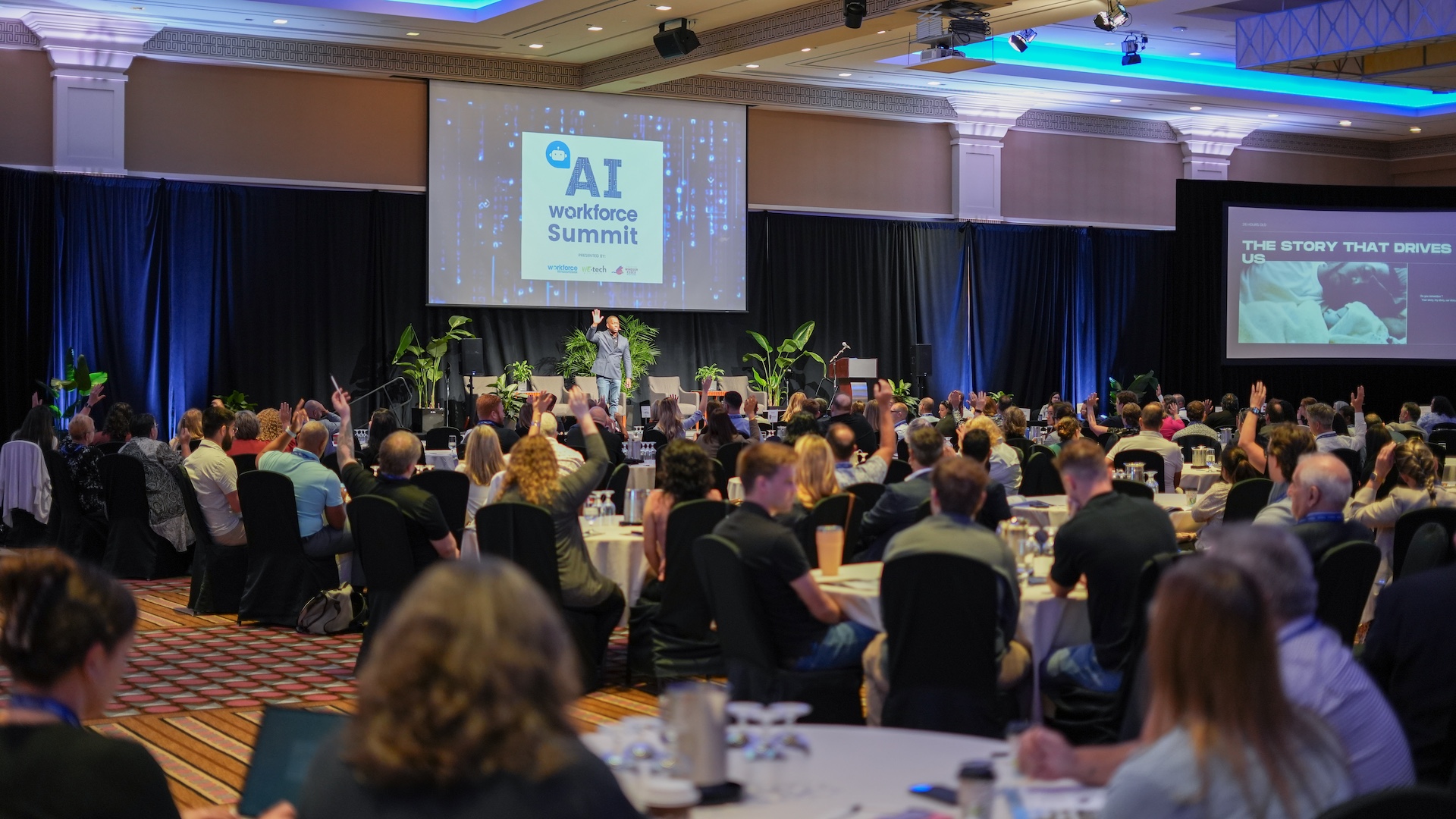
More than a year ago, WEtech Alliance helped convene our region’s first AI Summit alongside Workforce WindsorEssex and Tourism Windsor Essex Pelee Island. That gathering made one thing clear: our region is curious and ready to learn, but entrepreneurs and organizations need practical support to move from awareness to action.
That is why WEtech is leaning in.
Recent developments have only reinforced the importance of this work. As AI systems become more capable, entrepreneurs and organizations will need more than access to new tools. They will need practical skills, informed leaders, clear policies, cybersecurity awareness and the confidence to decide where AI can create value and where greater caution is required.
Through our partnership with Communitech’s Scale-Up Platform, supported by FedDev Ontario, we will introduce a roster of AI programming beginning in fall 2026 and continuing through winter 2027 for regional startups, entrepreneurs, companies and adopters.
This will include practical workshops focused on AI leadership, ethics, governance, cybersecurity and business development. We will also work alongside Camp Tech, a Canadian leader in accessible technology and AI skills training, to help entrepreneurs and organizations build practical skills and confidence. In addition, we will be adding specialized AI expertise to our roster of growth coaches, giving clients access to more tailored guidance as they assess and implement AI within their businesses.
This November, Women Entrepreneurship Day will feature a dedicated focus on AI, and WEtech is partnering with the Windsor International Film Festival (WIFF) for an AI-focused film and community conversation.
In winter 2027, our first community AI Build Day will give participants the tools and expert support to transform an idea into a working project in one day, with no coding experience required.
“At WEtech Alliance, our position is simple: AI should help us better support entrepreneurs and strengthen the quality, reach and impact of our work. It should enhance human judgment, not replace it, and it should never come at the expense of trust, privacy or accountability.”
– Yvonne Pilon, President & CEO, WEtech Alliance
As a regional innovation centre, our role is not to have every answer. It is to convene trusted experts, translate a rapidly changing landscape, connect entrepreneurs with relevant resources and create space for practical learning.
We are applying that same thinking internally. At WEtech Alliance, our position is simple: AI should help us better support entrepreneurs and strengthen the quality, reach and impact of our work. It should enhance human judgment, not replace it, and it should never come at the expense of trust, privacy or accountability.
Our goal is not AI adoption at all costs. It is informed, intentional adoption.
We are still figuring it out, and we will continue learning alongside the entrepreneurs and organizations we serve. We will also lean on industry leaders and policymakers while drawing on our broader networks, including Ontario’s Regional Innovation Centre network, Canada’s Tech Network and the Technology Councils of North America.
The opportunities are significant, the risks are real and the landscape will continue to change. We may not have every answer, but we will stay connected, keep learning, ask difficult questions and help translate what comes next for our region.
We will not sit on the sidelines of the AI economy. We will lean in.
Canadian AI Learning and Regional Resources
Learning and Training
- Amii: AI Literacy for Everyone: Self-paced learning covering AI foundations, business strategy, responsible adoption and governance for leaders. The annual subscription is currently $139 per learner.
- Vector Institute: Responsible AI Product Development Playbook: A practical Canadian resource that helps entrepreneurs and product teams consider responsible AI through ideation, development, testing, deployment and ongoing monitoring.
- Vector Institute: DaRMoD: A four-month program that helps eligible Canadian startups and small businesses move from an AI idea to a validated prototype. It is currently offered at no cost to eligible companies.
- Mila: AI Learning Programs: Learning opportunities from one of Canada’s national AI institutes, covering AI fundamentals, responsible AI, governance, policy, productivity and business strategy.
- Government of Canada: AI Literacy Resources: Information about Canada’s national AI literacy initiative and emerging learning opportunities for students, educators, workers and the public.
Regional Resources
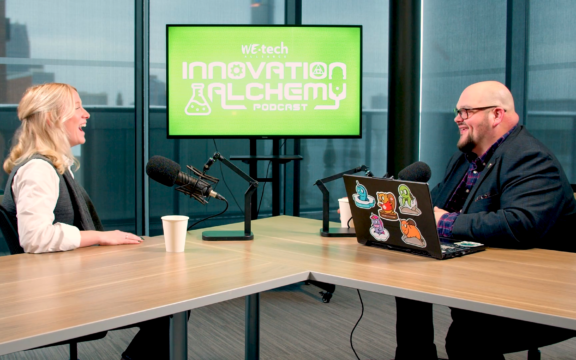
- Danielle Gifford’s Innovation Alchemy podcast
- AI Walks YQG
- WEtech Alliance’s AI Hub for workshops, events and AI programming
DID YOU KNOW? St. Clair College is expanding its practical AI programming with courses in AI Literacy, Agentic AI, AI: Prompt Engineering, AI for Entrepreneurs, AI for Marketing, AI for Human Resources Professionals and AI for Business Analysis.